
Table Radio
Designer:
Marty
Project Category:
Portable Speakers
Project Level:
Intermediate
Project Time:
8-20 Hours
Project Cost:
$100 – $500
Project Description:
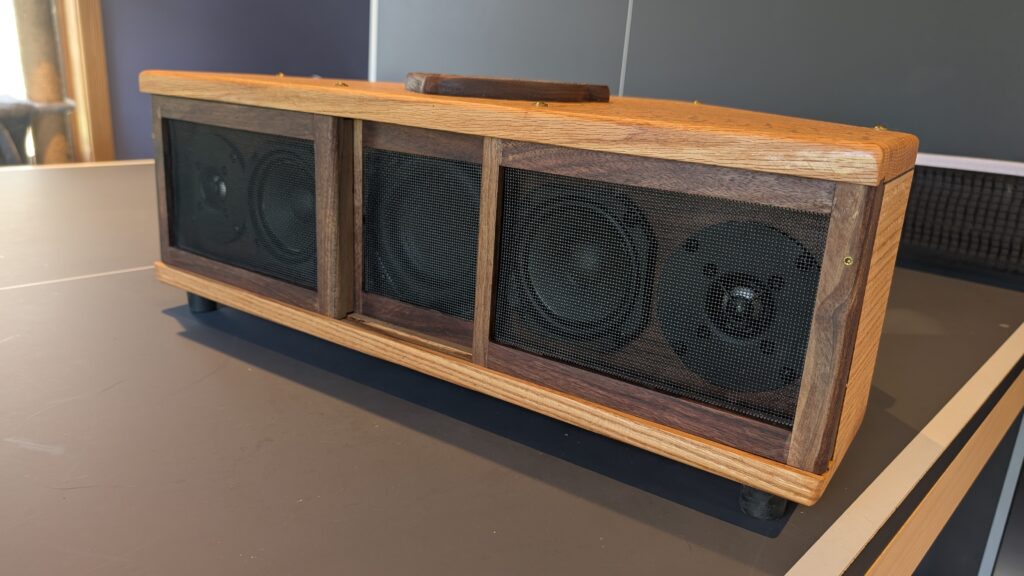
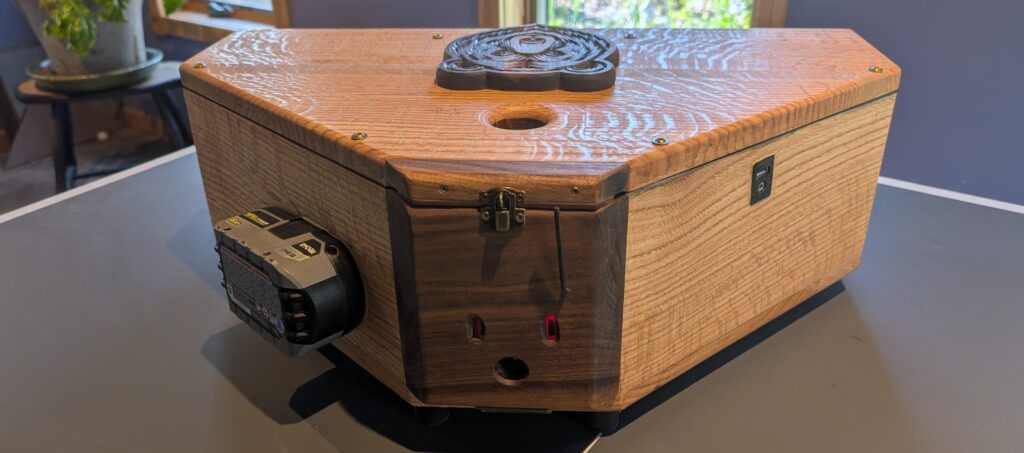
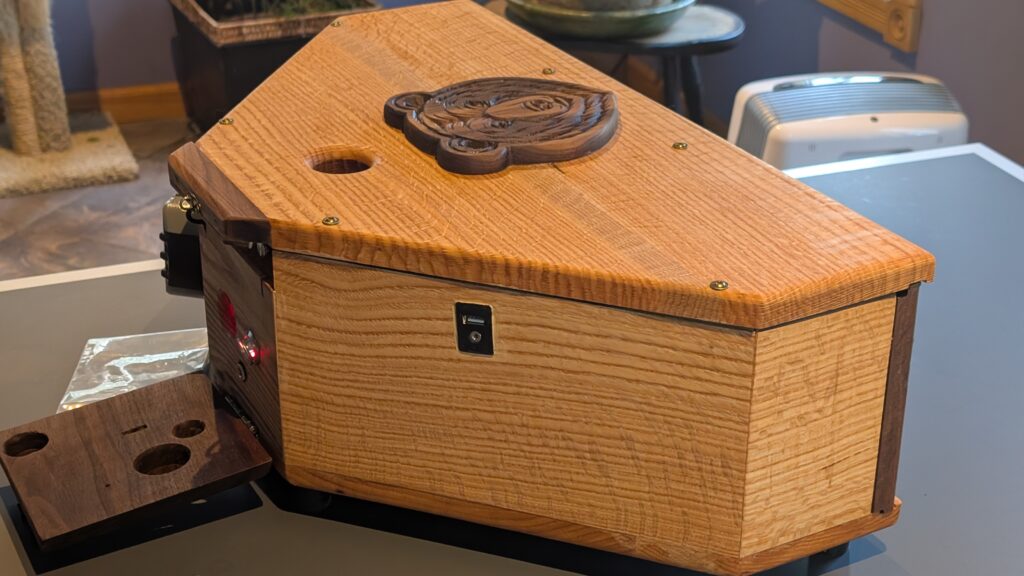
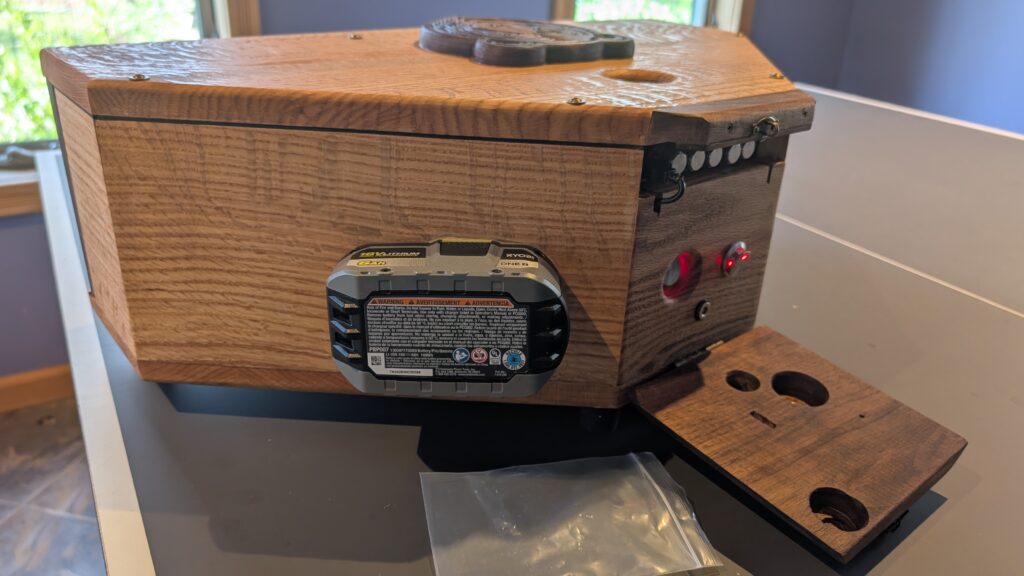
Table Radio, designed for a younger child’s bedroom/playroom. Requirements from the parents were “NO BUTTONS”. I decided it needed to be a radio he’d use up until college, if he so chooses. Repairable if needed. Secure for now, with option to simplify later. It Operates primarily for them as a Bluetooth Radio where the drivers are set to operate off the parents’ phone. It does support USB, and has an integrated Aux port. See Images.
Design Goals:
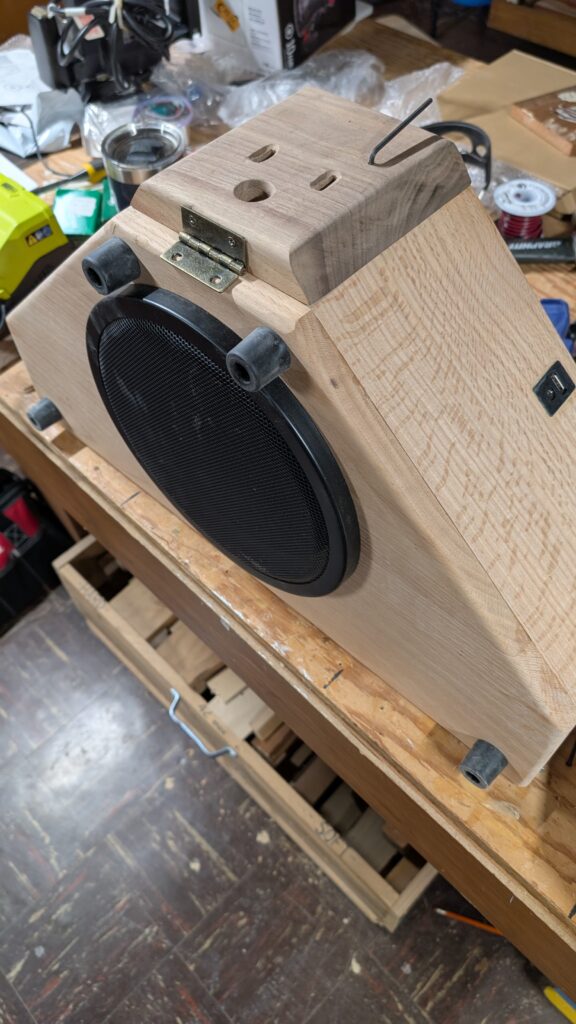
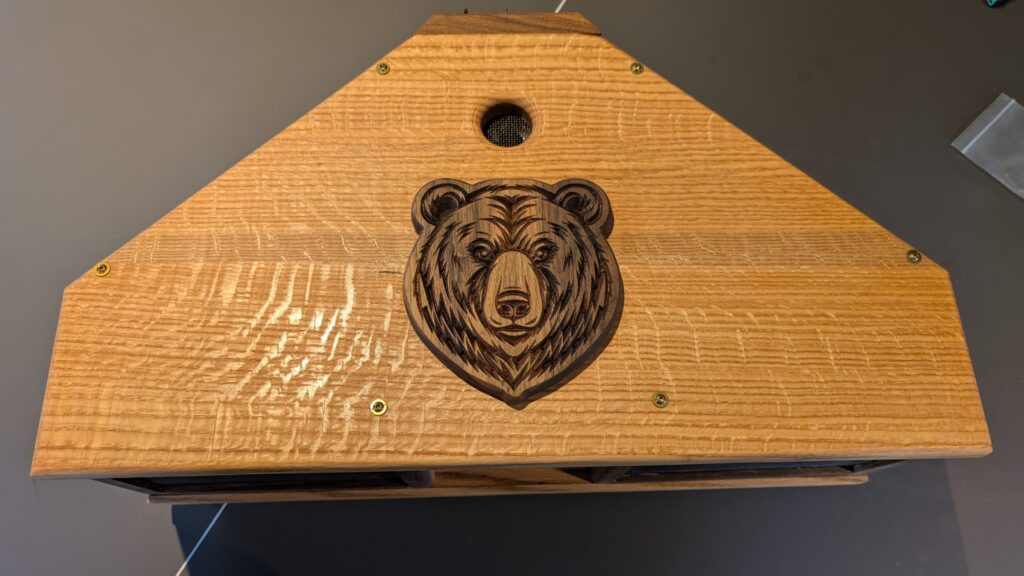
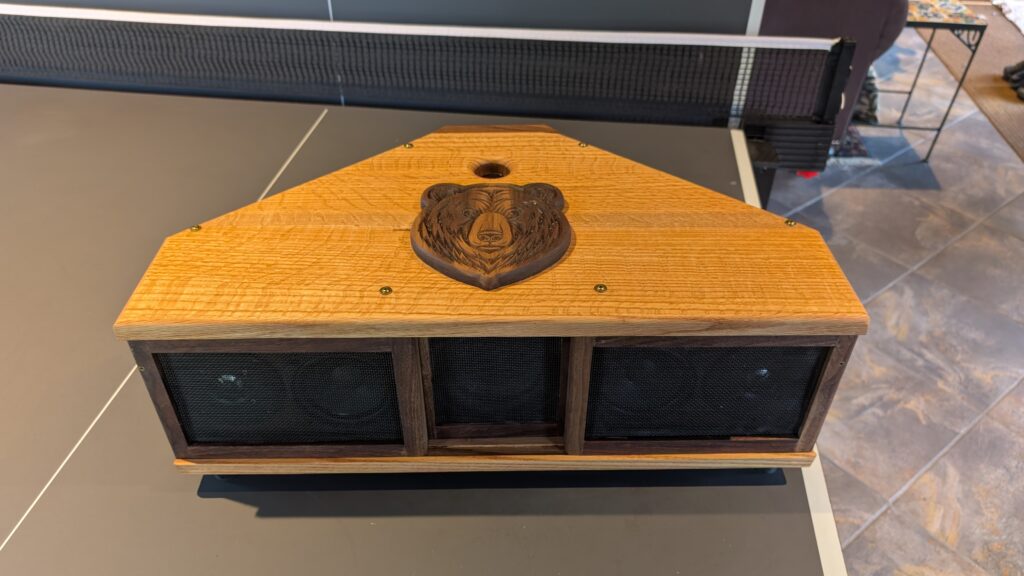
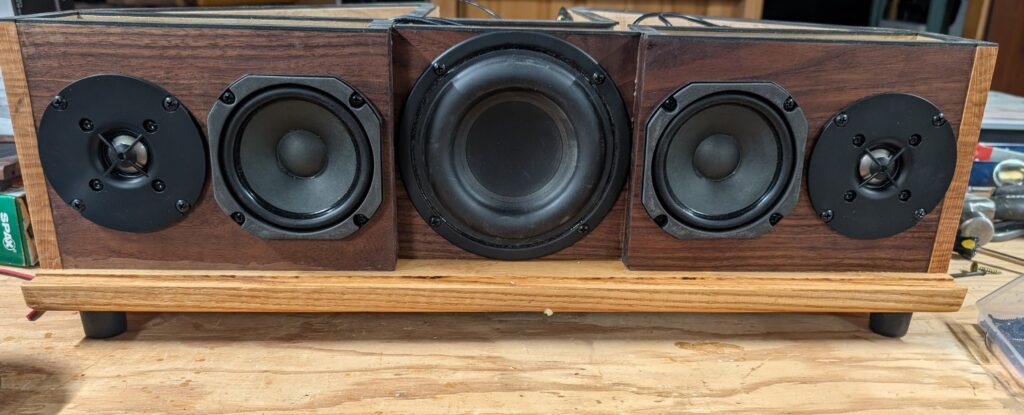
Secure from a 2 year old. Amplifier-2.1 with a decent amount of headroom. Needed to fit in a 24″ space (Width). Needed to fit the room aesthetically. Front left/Right with a center Subwoofer. Bottom has an 8″ Passive Radiator tuned to around 35hz. Cost needed to be kept down, afterall as I said it’s for a 2 year old. Drivers are protected behind Stainless Steel Grills (black coated). Wood chosen comes from family tree’s and barns. So his Great Great Grandfathers are both partially involved. Wood is either Red Oak, and or Black Walnut. Choice internals are MDF. Power is supplied by either a battery (Ryobi receptacle installed) or an external brick which plugs into the back.
Driver Selection:
Tang Band 264-917 5.25″ Subwoofer with Ferrite Magnet Qty1.
4″ WSF041.00 Part 293-710 LaVoce 4″ Ferrite Woofer Qty 2
Dayton Audio DSA215-PR 8″ Passive Radiator 295-549. Figured the 8″ could handle the TB 5.25″ Subwoofer.
Dayton Audio DC25T-8 Titanium Dome Tweeter for looks mostly Qty 2. 275-045
Enclosure Design:
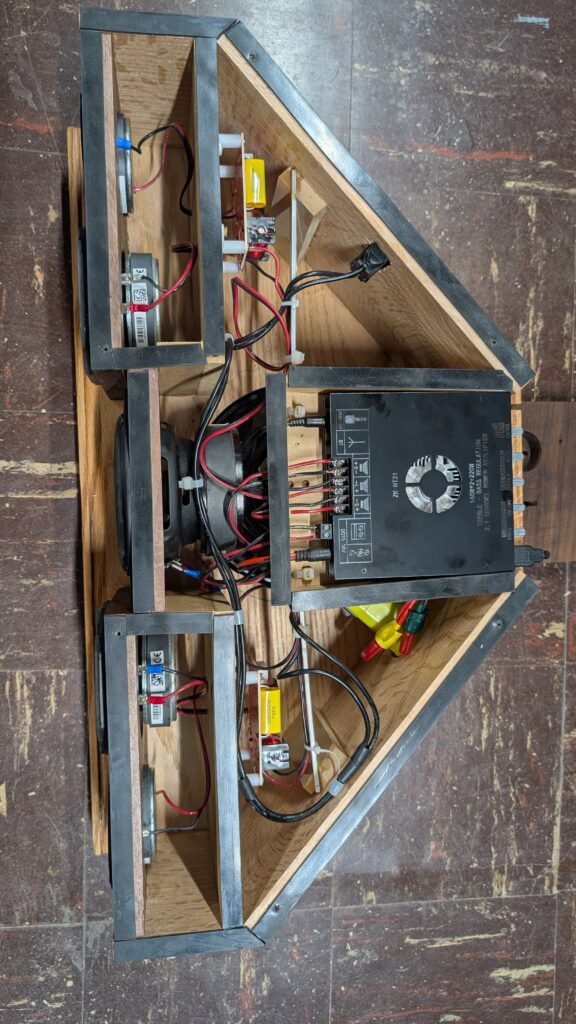
Designed to “fit” the drivers, and provide an almost “reversed” BOSE 901 feel to it. The central cavity is essentially dedicated space for the sub/passive radiator. The L/R channels are isolated in their own encloure with the crossovers mounted outside in the cavity area.
Enclosure Assembly:
See image, but its mostly designed around it’s ability to contain all the drivers/radiators/amp/Xovers in a relatively tight space. Wiring is “managed” as best I could. I added stuffing in the sub cavity and some in the L/R location
Crossover Design:
I had a couple stock crossovers, with a Xover point of 3500hz. This fit the chosen drivers well. I do NOT have a measurement system at this time.
About the Designer:
Retired Amateur Builder, have been building, rebuilding and designing speakers since the 1980s. I build what I like and if an audiophile enjoys them, I feel I’ve succeeded!
+ There are no comments
Add yours